Lethal Yellowing Palm Disease Guide
Lethal yellowing has no cure once it takes hold, but early recognition and resistant replanting protect your yard and your neighborhood. Learn the classic symptom sequence and what actually helps.
What Lethal Yellowing Is, and Why Florida Palms Are at Risk
Lethal yellowing is a fatal palm disease caused by a phytoplasma, a tiny bacterium-like organism carried from palm to palm by a sap-feeding insect called a planthopper. It has affected coconut palms in Florida for decades and also attacks other species, including date palms, Christmas palms, and several ornamental varieties planted across Lee County. The disease has no cure once it takes hold, and an infected palm will decline and die, usually within months. That blunt fact shapes everything else in this guide: early recognition, prompt removal of confirmed cases, and planting resistant species are the tools that actually work.
Southwest Florida is prime territory for the disease because the climate suits both the palms and the insect vector, and because neighborhoods often plant the same susceptible species in rows along streets and driveways. When one palm in a row becomes infected, its neighbors are at risk, which is why a single yellowing palm in a Lehigh Acres yard deserves attention rather than a wait-and-see approach. The disease does not spread through soil or through pruning tools in the way some fungi do, but it does move through a neighborhood on the wings of its insect carrier, so community awareness matters as much as individual care.
How to Recognize It: The Classic Sequence
Lethal yellowing follows a distinctive order that separates it from ordinary nutrient deficiency. First, nuts drop prematurely, often while still green, and flowers blacken and die. Then the oldest fronds begin to yellow, followed by progressively younger fronds, until the yellowing reaches the spear leaf at the crown. Finally the spear collapses, the crown dies, and the palm stands as a bare trunk with a dead top. The whole sequence can take three to six months in a coconut palm, and it rarely reverses at any stage. If you see fruit drop and blackened flowers together, do not wait for the fronds to confirm the diagnosis.
Nutrient deficiencies, by contrast, usually affect fronds in a pattern tied to a specific element, and new growth improves once the palm is fed correctly. Potassium deficiency causes spotting on older fronds, magnesium deficiency causes a yellow margin with a green center stripe, and manganese deficiency frizzles new fronds. None of those begins with premature nut drop and blackened inflorescences. Cold damage can also yellow a palm suddenly, but it follows a cold event and affects exposed fronds together rather than marching upward over months. When the pattern matches lethal yellowing, treat it as urgent and get a professional assessment.
Which Palms Are Susceptible, and Which Resist It
Coconut palms, especially tall varieties, are the most famously susceptible, and many of the classic Florida postcards of dying coconuts trace back to this disease. Date palms, including Canary Island date palms, are also vulnerable, as are Christmas palms, Pritchardia, and several other ornamental species. Sabal palms, the Florida state tree, show greater tolerance, and some newer coconut varieties bred for resistance, such as Malayan dwarf types, perform far better in affected areas. That difference matters when you replant after losing a palm: choosing a resistant species is the single most effective long-term defense.
Before replanting, check with a local nursery or arborist about current resistance recommendations for Lee County, because variety performance can change as the disease and its vector shift. Avoid planting another highly susceptible species in the exact spot where a diseased palm died, and consider diversifying the yard so one disease cannot take out an entire row. A mix of resistant palms, native trees, and shrubs is not only more resilient; it looks better and supports more wildlife than a monoculture hedge of identical palms.
What You Can and Cannot Do About an Infected Palm
There is an antibiotic treatment, oxytetracycline trunk injection, that can protect healthy, high-value palms in areas where the disease is active, but it is a preventive measure, not a cure for a palm already in decline. Injections must be repeated every few months, they cost money over the life of the palm, and they are usually justified only for specimen palms that would be very expensive to replace. For an ordinary landscape palm that is already showing the classic sequence, the honest advice is removal before the dead crown becomes a hazard and before the palm serves as a reservoir for the insect vector to infect neighbors.
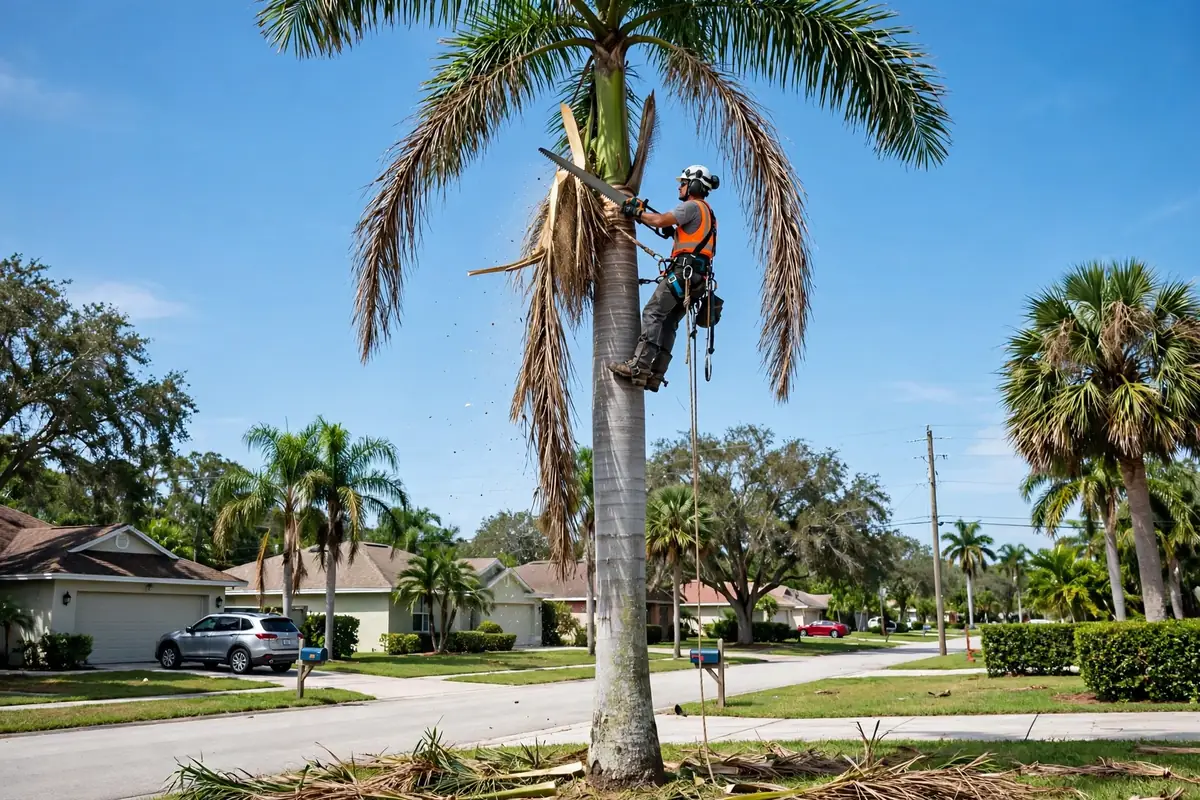
Removal should be handled professionally, especially for tall palms near structures, and the debris should be hauled away rather than chipped into mulch spread near other palms. The stump can be ground and the area replanted with a resistant species once the site is clear. Do not try to save an infected palm by pruning off yellow fronds; the disease is systemic, the green fronds you remove are the palm's remaining energy source, and pruning does not slow the phytoplasma. The kindest and most practical response is a prompt assessment, a clear decision, and a resistant replacement.
Protecting the Rest of Your Palms
Prevention starts with plant selection and continues with good palm care. Plant resistant varieties, give palms full sun and well-drained sandy soil, and feed them with a proper palm fertilizer that supplies potassium, magnesium, and manganese in the ratios palms need. Avoid wounding palm trunks with string trimmers, climbing spikes, or unnecessary cuts, because wounds attract palmetto weevils and other pests that compound any disease stress. Keep the crown clean with regular trimming that removes only dead fronds and seed pods, and inspect palms monthly during the growing season for early signs of yellowing or fruit drop.
If a neighbor's palm shows signs of lethal yellowing, mention it kindly and early, because the vector does not respect property lines. Community action, such as an HOA replacing susceptible street palms with resistant varieties over time, does more than any single homeowner can do alone. In a county where palms define the landscape, treating lethal yellowing as a shared problem rather than a private embarrassment is how neighborhoods keep their canopy. Call (239) 686-1550 if you are unsure about a palm in your yard; an assessment now is far cheaper than an emergency removal later.
The Insect Vector and Why Neighborhoods Matter
Lethal yellowing spreads through a planthopper, a small sap-feeding insect that picks up the phytoplasma from an infected palm and carries it to healthy palms as it feeds. The insect is tiny, mobile, and difficult to control across an entire neighborhood with spraying alone, which is why individual homeowner action, while necessary, is never sufficient by itself. Removing confirmed infected palms promptly reduces the reservoir of disease the insects can draw from, and planting resistant species reduces the number of susceptible hosts available for the next round of transmission. Both steps work slowly, over seasons, rather than delivering an immediate visible result.
That slow, shared dynamic is why HOAs and neighborhood groups matter so much in managing lethal yellowing in Lee County. A street lined with identical susceptible coconut palms will lose them in waves if infected trees are left standing and replacements repeat the same species, while a street that gradually replaces losses with resistant varieties and sabal palms builds a canopy that the disease cannot sweep through. Community nurseries, extension services, and local arborists can advise on which resistant varieties perform best in a given area, and that advice is worth seeking before a replanting decision rather than after a second palm begins to yellow.
Homeowners can also reduce vector pressure in small ways: keeping palms healthy and well fed so they tolerate stress better, avoiding wounds that attract other pests, and removing dead palms rather than leaving them as standing reservoirs. None of these steps replaces the core actions of prompt removal and resistant replanting, but together they shift the odds for the whole street. If you suspect lethal yellowing on your property, tell your neighbors as well as your arborist, because the disease does not respect fences, and a neighbor warned early can protect their own palms while yours is being assessed.
| Palm group | Susceptibility | Notes |
|---|---|---|
| Tall coconut palm | High | Classic host, declines in months |
| Canary Island date palm | High | Valuable specimen, protect or replace wisely |
| Christmas palm | Moderate to high | Common ornamental, watch for sequence |
| Sabal palm | More tolerant | Florida native, better choice for replanting |
| Malayan dwarf coconut | Resistant types available | Ask nursery for current resistant stock |
| Royal palm | Lower concern for lethal yellowing | Still watch for other palm pests |
Frequently Asked Questions
What is lethal yellowing in palm trees?
It is a fatal disease caused by a phytoplasma spread by a planthopper insect. It has no cure once established, and an infected palm typically dies within months.
What are the first signs of lethal yellowing?
Premature nut drop and blackened flowers come first, followed by yellowing that moves from older fronds upward to the spear leaf, which then collapses.
Can lethal yellowing be treated?
Preventive antibiotic trunk injections can protect healthy high-value palms, but they do not cure a palm already in decline. Infected palms should usually be removed.
Is lethal yellowing contagious to other plants?
It spreads between palms via its insect vector, not through soil or to non-palm plants. Removing infected palms and planting resistant species reduces neighborhood risk.
What palm should I plant after losing one to lethal yellowing?
Choose a resistant variety, such as a Malayan dwarf coconut type or a tolerant sabal palm, and ask a local nursery about current recommendations for Lee County.
Related Reading
For local help with the topics above, see our tree service blog, our tree removal cost guide, and our storm damage cleanup service. For a free on-site assessment anywhere in Lehigh Acres, call (239) 686-1550 or visit our contact page.
Free On-Site Estimates Across Lehigh Acres
Licensed and insured, 4.9 rated from 180+ reviews, with 2,400+ jobs completed over 14+ years. Call (239) 686-1550 today.