Lee County HOA Tree Rules
HOA tree rules in Lee County decide which trees you can remove, plant, or trim, and the paperwork often matters more than the chainsaw. Learn approvals, timing, and how to avoid delays.
Why HOAs Care About Trees in Lee County
Homeowners associations in Lee County care about trees because trees are among the few landscape features that can damage a neighbor's property, block a view, or change the look of an entire street. An HOA's tree rules therefore cover the three things that cause most disputes: which trees can be removed, which trees can be planted, and who is responsible when a tree causes a problem. In Lehigh Acres, where many communities grew quickly and lots are close together, those rules vary widely. A gated community with a full architectural review board may require written approval for any removal, while a smaller HOA may only care about street trees and palms in the front yard.
The legal backdrop matters too. Florida law gives homeowners certain protections for trees, including rules about trimming a neighbor's overhanging branches and about removing trees that pose a danger, but HOA covenants can add procedures on top of those rights. That layering is where confusion starts: a homeowner hears that Florida law allows removal of a dangerous tree and assumes no HOA approval is needed, or hears that the HOA controls all landscaping and assumes a hazardous tree must stay until a committee meets. In practice, most HOAs have an emergency exception for dangerous trees, and most also expect a paper trail even for emergency work, such as photos and a written arborist note filed after the fact.
What Most Lee County HOAs Require Before Removal
The most common requirement is a written architectural request describing the tree, its location, and the reason for removal, often with photos and sometimes with a letter from a tree company. Some HOAs ask for a replacement plan, such as planting a new tree of an approved species within a set time, and some require a deposit or a fee to cover inspection. Front-yard trees and street trees face the strictest review, because they affect curb appeal and the community's canopy, while backyard trees that are not visible from the street may need only a notification. Palms are frequently treated separately, with routine palm trimming allowed without approval but palm removal still requiring a request.
Timing is the practical issue. Architectural committees often meet monthly, so a routine removal request can take two to six weeks from submission to approval, and incomplete paperwork restarts the clock. If you are planning a removal that is not urgent, submit early and keep copies of everything. If the tree is genuinely hazardous, document the hazard with dated photos, get a written assessment from a licensed tree company, and notify the HOA in writing at the same time you schedule emergency work. That combination protects you if a neighbor or a board member later questions the removal, and it mirrors what insurers want to see as well.
Trimming, Planting, and Neighbor Tree Rules
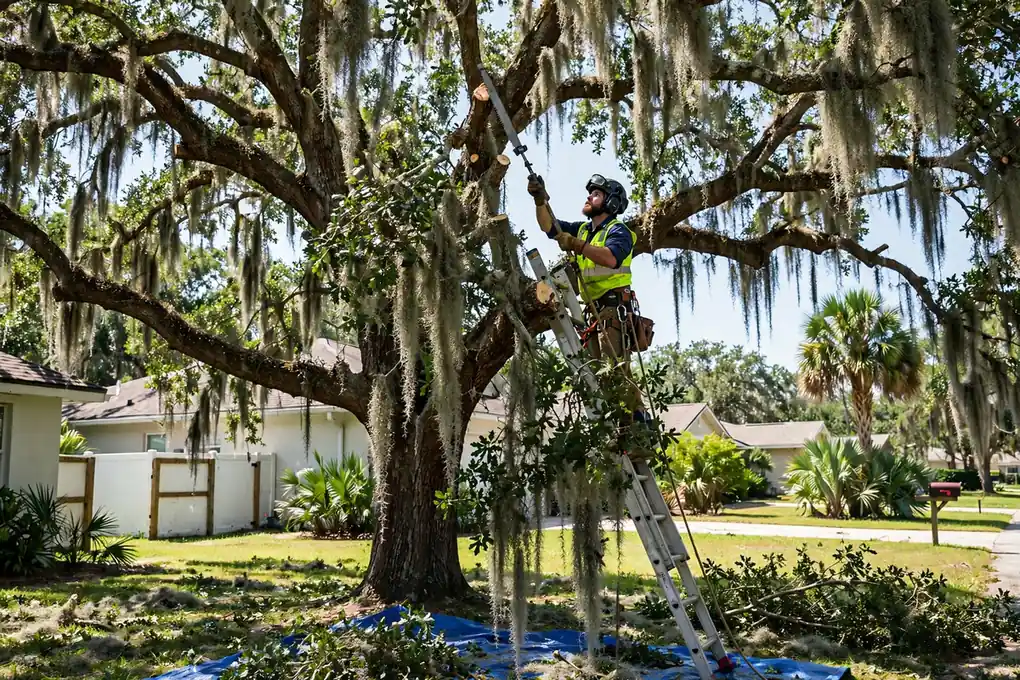
Trimming rules are usually lighter than removal rules, but they still exist. Many HOAs require that trimming be done by a licensed company, that no tree be topped, and that street trees be kept clear of sidewalks and roadways. Some specify a trimming season or a minimum clearance from roofs and driveways. Routine palm trimming, which most communities expect at least annually, is rarely controversial, but a heavy crown reduction on a prominent front-yard oak may draw a notice if it changes the tree's shape dramatically. When in doubt, a quick email to the property manager before work starts is cheaper than a violation letter afterward.
Planting rules are where homeowners most often trip up. HOAs commonly maintain an approved plant list and a prohibited list, and large species, fruit trees that drop messy fruit, and trees with invasive roots are frequent exclusions. Planting a tree too close to a property line, a sidewalk, or a utility easement can create a violation even if the species is approved, because the location matters as much as the tree. Neighbor disputes add another layer: under Florida law, you generally may trim branches that overhang your property up to the line, but you may not enter a neighbor's yard or damage the tree's health in the process, and the cost of that trimming is usually yours unless the HOA documents say otherwise.
Permits, Lee County Rules, and Protected Trees
Beyond the HOA, Lee County and local municipalities have their own tree protections, particularly for native species, heritage trees, and trees in environmentally sensitive areas. A tree on a lot near a preserve, a waterway, or a conservation easement may need county review even if the HOA has already approved removal, and some species have protections that apply regardless of who owns the land. The practical step is to ask both questions before scheduling work: does the HOA require approval, and does the county or city require a permit? A reputable tree company in Lehigh Acres will know which neighborhoods trigger which review and can help you assemble the paperwork, but the ultimate responsibility for approvals sits with the homeowner.
For rental properties and homes in transition, the same rules apply, and a tenant generally cannot authorize a removal without the owner's written consent plus HOA approval. Keep a simple file for each tree job: the HOA approval letter, any county permit, the tree company's estimate and invoice, and before-and-after photos. That file resolves most disputes quickly, whether the question comes from a new board, a buyer during a sale, or an insurer after a storm. Trees are long-lived community assets, and the paperwork that governs them is part of owning a home in a managed community, not an obstacle to be worked around.
How to Get Approval Without Delays
Start by reading the current covenants and architectural guidelines, not a summary from a neighbor, because rules change when boards update them. Identify the exact form, the required attachments, and the submission method, whether it is an online portal, an email to a manager, or a paper form. Write the request plainly: species and size if known, location on the lot, reason for removal or trimming, replacement plan if any, and the name of the tree company. Attach clear photos from the street and from the yard, and a short letter from the tree company if the tree is hazardous, leaning, or diseased.
Follow up politely if you hear nothing within the stated review period, and do not schedule the crew for the day after submission in the hope that approval will arrive in time. If the request is denied, ask for the reason in writing and for the appeal process, and consider whether a compromise, such as trimming instead of removal, or planting a larger replacement, would satisfy the board. Most HOA tree disputes resolve at this stage, because boards are generally willing to approve work that is well documented and clearly justified. Call (239) 686-1550 if you need a written assessment or photos to support your request; that documentation is often the difference between approval and delay.
Rentals, Sales, and Changing Boards
HOA tree rules do not pause when a home changes hands or changes occupants, and that continuity creates some of the most common disputes in Lee County communities. A buyer who inherits a mature tree also inherits its HOA obligations, including any pending violation for an unapproved removal or an overgrown street tree, so a pre-purchase review of HOA correspondence and architectural records is worth the effort. Sellers, for their part, should disclose any tree work done without approval, because a violation discovered after closing can become a negotiation point or a legal headache that far exceeds the cost of the original paperwork.
Rental properties add a second layer. Tenants generally cannot authorize tree removal without the owner's written consent, and the owner remains responsible to the HOA even when a tenant arranged the work. Property managers should therefore route every tree request through the owner and the HOA together, with photos and a written scope, rather than letting a tenant book a crew directly for a front-yard tree. That single habit prevents most rental-related tree violations, and it protects the tenant as well, who might otherwise face a charge for work the HOA later orders reversed or replaced.
Changing boards also change enforcement. A new board may enforce a rule the previous board ignored, or update the approved plant list and the architectural guidelines, and homeowners are bound by the current documents rather than by what a previous manager told them informally. When rules change, the association should communicate them, but homeowners should also read updated guidelines rather than relying on memory. Keeping a personal file of approvals, permits, and correspondence for each tree job is the simplest defense against all three situations, because it proves what was approved, when, and by whom, regardless of who sits on the board today.
| Situation | Usual HOA step | Typical timing |
|---|---|---|
| Routine front-yard removal | Written architectural request + photos | 2–6 weeks |
| Hazardous or storm-damaged tree | Notify in writing + arborist note, emergency exception | Same week, file paperwork after |
| Routine palm trimming | Often no approval needed | Anytime, keep receipts |
| Heavy crown reduction, front oak | Notify manager, approval may be required | 1–4 weeks |
| New tree planting | Approved species list + location check | With architectural request |
| Neighbor overhang trimming | Trim to property line, no trespass | Your schedule, your cost usually |
Frequently Asked Questions
Do I need HOA approval to remove a tree in Lee County?
In most managed communities, yes for front-yard and street trees. Routine removals usually need a written architectural request with photos, while hazardous trees often qualify for an emergency exception with paperwork filed afterward.
How long does HOA tree approval take?
Committees often meet monthly, so routine requests commonly take two to six weeks. Incomplete paperwork restarts the clock, so submit a complete request early.
Can I trim a neighbor's tree that hangs over my yard?
Under Florida law you generally may trim overhanging branches up to the property line, but you may not enter the neighbor's yard or damage the tree's health, and the cost is usually yours.
Does the county also require a permit?
Sometimes. Lee County and local rules can protect native, heritage, or environmentally sensitive trees even after HOA approval, so check both before scheduling work.
What if my HOA denies a tree removal?
Ask for the denial reason in writing and the appeal process. A compromise such as trimming instead of removal, or planting an approved replacement, often resolves the issue.
Related Reading
For local help with the topics above, see our tree service blog, our tree removal cost guide, and our storm damage cleanup service. For a free on-site assessment anywhere in Lehigh Acres, call (239) 686-1550 or visit our contact page.
Free On-Site Estimates Across Lehigh Acres
Licensed and insured, 4.9 rated from 180+ reviews, with 2,400+ jobs completed over 14+ years. Call (239) 686-1550 today.